Roofing SEO matters because most homeowners research roofers online before they ever call. If your company is not visible in Google Maps and the local organic results, you are losing inspections to competitors who may not do better work, but are simply easier to find.
Why SEO Is the Best Lead Source for Roofers
When a hailstorm rolls through a neighborhood, the first thing homeowners do is grab their phone and search "roof repair near me." They're not calling a number they saw on a truck. They're not asking Facebook. They're searching Google.
If your company doesn't appear in the top 3 results — specifically the Google Maps 3-Pack — you're invisible to the majority of those potential customers.
Paid ads (Google LSA, PPC) are expensive and stop the moment you stop paying. SEO compounds over time. A well-ranked website generates leads 24/7 without per-click costs. That's why the best-performing roofing companies invest heavily in it.

Roofing Keyword Research
Before building any SEO strategy, you need to know which keywords your customers are actually searching. Roofing keywords fall into three buckets:
High-Intent Transactional Keywords (target these first)
These searchers are ready to hire. They're your most valuable traffic.
- [City] roofing contractor — highest volume commercial intent
- [City] roof repair — urgent, high-conversion
- Emergency roof repair [city] — peak urgency, great for GBP
- Roof replacement [city] — high ticket, longer decision cycle
- Storm damage roof repair [city] — seasonal surge opportunity
- Roofing company near me — mobile-first, GBP-dominant
Informational Keywords (great for blog content)
These searchers are researching. Capturing them early builds trust and generates remarketing audiences.
- How much does a new roof cost in [state]
- How long does a roof last
- Signs you need a new roof
- Asphalt shingles vs metal roofing
- Insurance claim roof replacement process
Google Business Profile Optimization
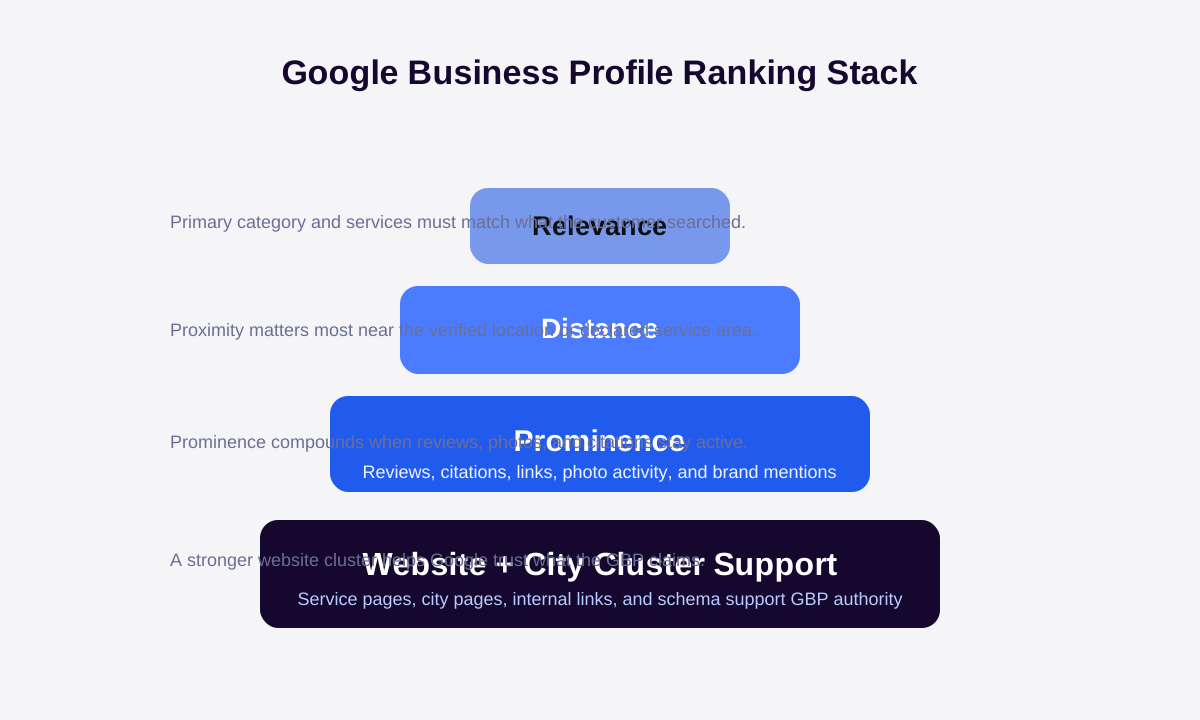
Your Google Business Profile (GBP) is the single highest-ROI SEO asset you have as a roofer. Here's how to fully optimize it:
Complete every field
- Business name (exact legal name — no keyword stuffing)
- Primary category: "Roofing Contractor"
- Secondary categories: "Gutter Cleaning Service," "Siding Contractor" if applicable
- Full address (or service area if you don't have a storefront)
- Phone number (local area code — not a tracking number as primary)
- Website URL
- Business hours including emergency availability
Upload photos consistently
Businesses with 100+ photos get significantly more views and direction requests. Upload:
- Before/after project photos (every completed job)
- Team photos and truck photos
- Photos geotagged with job location metadata
- Interior photos of your office if applicable
Use Google Posts weekly
Google Posts appear directly in your GBP and help signal activity to Google's algorithm. Post about seasonal specials, completed projects, and tips. Each post should have a CTA linking to your website.
On-Page SEO for Roofing Websites
Homepage optimization
Your homepage should clearly signal what you do and where you do it. The most common mistake: no city name in the headline. If your page says "Quality Roofing Services" with no location, Google doesn't know what market to rank you in.
- H1 tag: "[City] Roofing Contractor | [Company Name]"
- First paragraph: mention your city, primary service, and years in business
- Schema markup: LocalBusiness, RoofingContractor type
- NAP (Name, Address, Phone) in text on every page
Service pages
Create individual pages for each major service: roof replacement, roof repair, gutter installation, storm damage, commercial roofing. Each page needs:
- Unique H1 with service + city
- 300+ words of unique content
- Before/after images with alt text
- Internal links to related services
- A clear CTA (phone number + form)
Service Area Pages
If you serve multiple cities or neighborhoods, create individual landing pages for each. A roofer in Dallas should have pages for: Dallas, Plano, Frisco, McKinney, Allen, Richardson, etc.
These pages should NOT be identical with only the city name swapped — that's duplicate content. Each needs:
- Unique intro paragraph mentioning local landmarks or weather patterns
- Local customer testimonials from that area
- Map embed showing your service coverage
- Local schema markup
Review Strategy
93% of homeowners check reviews before hiring a roofing contractor. Google weighs both the quantity and recency of reviews in local ranking algorithms.
Getting reviews systematically
- Send a review request SMS within 24 hours of job completion
- Use a direct Google review link (shorten with bit.ly for SMS)
- Train your crew to verbally ask at job completion
- Follow up once by email if no review within 7 days
Link Building for Roofers
Links from other websites to yours signal authority to Google. For local roofing SEO, these are the highest-value link types:
- Supplier/manufacturer links: If you're a GAF Master Elite or CertainTeed SELECT ShingleMaster contractor, you get a listing on their "Find a Contractor" pages — that's a high-authority backlink
- Local Chamber of Commerce: Most chambers include member directory links
- BBB and Angi profiles: These directories pass link equity even if you don't use them for leads
- Local news coverage: Sponsor a local event or donate to a cause — often results in a mention with link
- NRCA membership: National Roofing Contractors Association listing
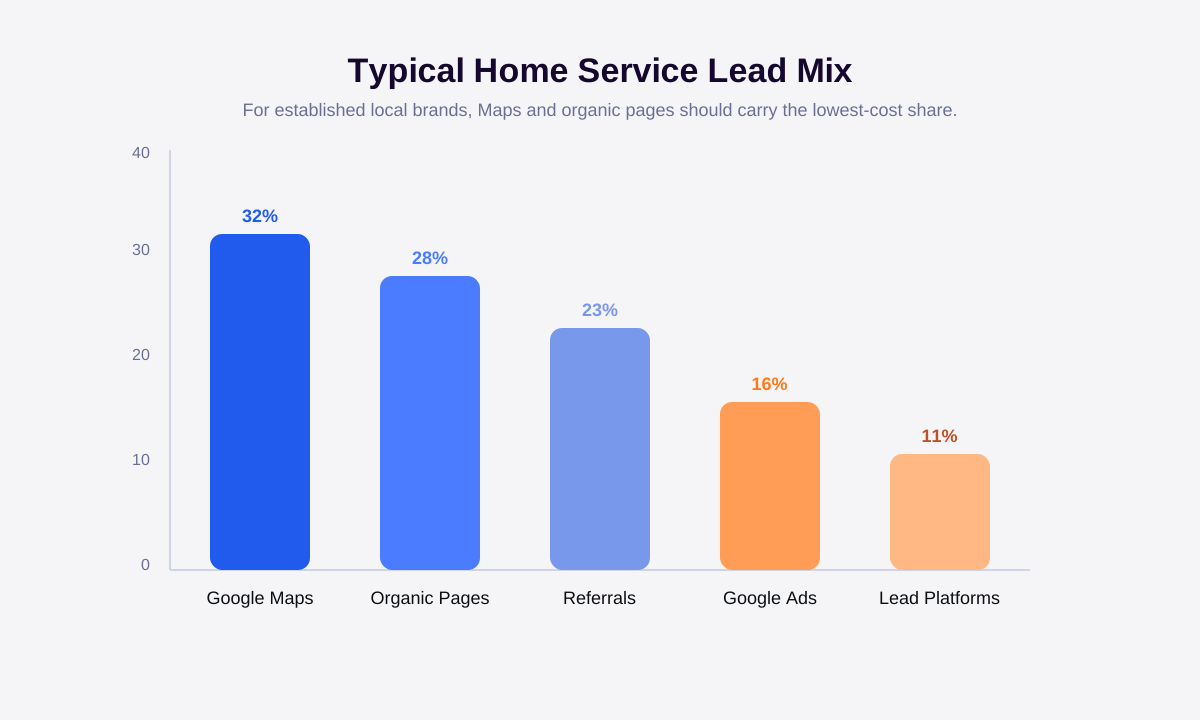
Case Study: How a Regional Roofer Got a 65% Lead Boost
A multi-location roofing company in the Midwest partnered with WebFX for a comprehensive SEO overhaul. Starting point: ranking on page 2–3 for primary service keywords, generating roughly 12 leads/month from organic search.
Key factors: complete GBP optimization, creation of 8 service area pages, systematic review generation (from 23 to 140+ reviews), and manufacturer directory listings secured as backlinks.
Technical SEO Checklist for Roofing Websites
Before you build links or create content, make sure your site's technical foundation is solid:
- ✓ Mobile-responsive design (60%+ of roofing searches are on mobile)
- ✓ Page speed under 3 seconds (use Google PageSpeed Insights)
- ✓ HTTPS (secure SSL certificate)
- ✓ Crawlable by Google (no robots.txt blocks)
- ✓ XML sitemap submitted to Google Search Console
- ✓ LocalBusiness schema on homepage
- ✓ Click-to-call phone number on mobile
- ✓ Core Web Vitals passing in Search Console
Want a Website That Ranks and Converts?
If you want a second opinion on your roofing search visibility, book a short audit. We can review your site, Google profile, service-area coverage, and review strategy and show you where the bottlenecks are.
Book a Free 15-Min Strategy CallRelated roofing and local-search guides
These are the practical next reads if you need help turning visibility into inspections, replacement jobs, and steadier lead flow.
Frequently Asked Questions
How long does roofing SEO take to work?
Most roofing contractors see meaningful ranking improvements within 90–120 days of consistent SEO work. Google Business Profile improvements can appear in 30–60 days. Full organic ranking for competitive city + service keywords typically takes 6–12 months. The work builds on itself — every review, page, and link compounds over time.
What are the best keywords for roofing SEO?
The highest-converting roofing keywords include "[city] roofing contractor," "[city] roof repair," "emergency roof repair [city]," "roof replacement cost [city]," and "storm damage roof repair [city]." Long-tail variations with neighborhood names also perform well because they have less competition and higher purchase intent.
Does Google Business Profile matter for roofers?
Yes — Google Business Profile is arguably the single most important SEO asset for roofing contractors. The local 3-Pack appears above organic results and captures 44% of all clicks. An optimized GBP with photos, services, and consistent reviews drives more leads than a website alone for most roofers.
How much does roofing SEO cost?
US SEO agencies charge $1,500–$5,000/month for roofing SEO. However, many roofers work with smaller boutique agencies or specialists at $500–$1,500/month. One-time website SEO setup costs $2,000–$8,000. ROI from SEO is typically 200–400% over 12 months compared to paid ads.
Can a roofing company do SEO without a blog?
Yes, but you'll capture fewer keywords. The most important SEO assets are your Google Business Profile, homepage, and service-area pages. A blog helps capture informational searches ("how much does a new roof cost") that can convert into leads, but it's secondary to getting your core pages optimized first.


