If you run an HVAC company and you're not investing in SEO, you're handing your best leads to competitors every single day. The homeowner whose furnace quit at midnight — the one who will pay anything to get heat back — they're not flipping through the Yellow Pages. They're typing "emergency furnace repair near me" into their phone. The question is whether your business shows up.
This guide covers everything you need to know about HVAC SEO in 2025: what makes it different from other trades, how to find the right keywords, how to optimize your Google Business Profile, and how to build a local SEO presence that generates leads for years — not just while your ad budget is running.

Why HVAC SEO Is Different from Other Trades
HVAC search behavior is unlike almost any other home service. Plumbing emergencies are similar, but HVAC has a unique combination of factors that make SEO both more valuable and more complex:
Emergency Intent + Seasonal Volume = Double Opportunity
HVAC searches spike twice a year — in early summer when AC fails and in late fall when furnaces die. Emergency searches peak in June–August for cooling and November–February for heating. This means you need an SEO strategy that works year-round but accelerates during crunch season. Emergency keywords like "AC not cooling," "furnace not turning on," and "HVAC repair near me" have near-100% commercial intent. Someone who typed that query is calling whoever ranks #1.
High Ticket Values Justify Real Investment
With replacement jobs averaging $4,000–$12,000 and even service calls averaging $200–$600, a single organic lead from SEO can generate more revenue than a month's worth of social media posting. The math on HVAC SEO ROI is compelling at almost any market size.
The Replacement vs. Repair Split
HVAC companies need to rank for two very different buyer journeys: the panicked homeowner needing same-day repair, and the homeowner who's been limping along with an old system and is ready to replace it. These require completely different content strategies, which we'll cover in the service pages section.
Keyword Research for HVAC Companies
HVAC keyword research falls into three buckets, each requiring different content and SEO treatment:
Bucket 1: Emergency Keywords (Highest Priority)
These have the highest intent and the fastest conversion. Target them on your homepage and core service pages:
- [city] AC repair
- Emergency HVAC repair [city]
- AC not cooling [city]
- Furnace repair [city]
- HVAC not working [city]
- 24-hour AC repair [city]
Bucket 2: Seasonal Keywords (High Volume, Cyclical)
These drive volume during tune-up season and should be targeted on dedicated service pages and blog content:
- AC tune-up [city]
- Spring HVAC maintenance [city]
- Air conditioning service before summer
- Furnace tune-up [city]
- HVAC maintenance plan [city]
Bucket 3: Replacement Keywords (Highest Revenue)
Homeowners researching new systems are in the evaluation phase — they need more information and trust-building, but the jobs are worth $5,000–$15,000:
- New AC unit installation [city]
- HVAC system replacement cost [city]
- Best central air conditioner brands
- Carrier vs Trane vs Lennox
- How long does HVAC last
Google Business Profile Optimization for HVAC
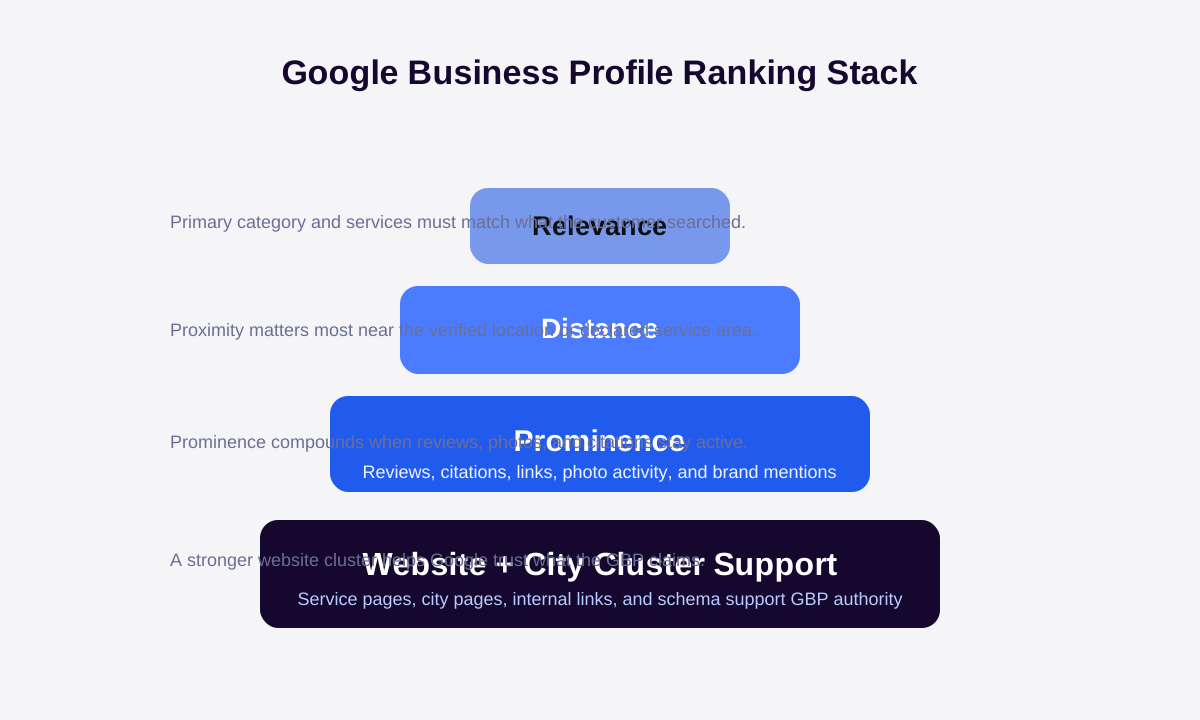
Your Google Business Profile is the single highest-leverage SEO asset for an HVAC company. Here's how to maximize it:
Business Description
Write a 750-character description that includes your primary service area, key services (AC repair, furnace repair, installation, maintenance), and what makes you different (24/7 availability, licensed and insured, specific brands serviced). Include your city name naturally at least twice.
Services Section
Use the Services section to list every service you offer with a brief description. Google uses this to match your profile to relevant searches. Include: AC repair, furnace repair, heat pump installation, ductwork, indoor air quality, HVAC maintenance plans, and emergency service.
Photos — The Most Underused GBP Feature
HVAC profiles with 10+ photos get 520% more calls than profiles with 0–3 photos. Upload photos of: your technicians working, your service trucks, completed installations, your shop/office, before/after photos of dirty vs. clean systems, and any certifications or awards on the wall.
Respond to Every Review
Google factors review response rate into local ranking. Respond to every review — positive and negative — within 24 hours. For negative reviews, acknowledge the concern, offer to make it right offline, and keep the response professional. Showing you respond to all reviews also reassures prospective customers.
Q&A Section
Seed your own Q&A section with the questions customers always ask: "Do you offer 24/7 emergency service?", "What brands do you service?", "Do you offer financing?" Answer these yourself before competitors or confused customers do it for you.
Service Pages for Every Equipment Type
One of the biggest HVAC SEO mistakes is having a single "Services" page that lists everything. Google rewards specificity. You need dedicated, optimized pages for each major service and equipment type:
Required Service Pages
- AC Repair [City] — target emergency + seasonal keywords, include seasonal content
- AC Installation [City] — target replacement keywords, include financing info
- Furnace Repair [City] — seasonal, emergency intent in winter
- Furnace Installation [City] — high-ticket replacement, brands offered
- Heat Pump Installation [City] — growing search volume, energy efficiency angle
- HVAC Maintenance [City] — service agreement upsell, seasonal
- Ductwork Services [City] — higher ticket, often paired with system replacement
- Indoor Air Quality [City] — growing category, includes air purifiers, UV lights
Equipment Brand Pages
Many homeowners search for the brand they already have: "Carrier AC repair near me" or "Trane furnace installation cost." If you service or install Carrier, Trane, Lennox, Goodman, or Rheem systems, create a dedicated page for each brand. These pages are relatively easy to rank and convert well because the searcher has already made a brand preference.
What Each Service Page Needs
Every service page should include: H1 with keyword + city, a 300-500 word description of the service, your service area coverage, pricing guidance (ranges are fine — refusing to show any price increases bounce rate), customer reviews specific to that service, FAQs for that service, and a strong CTA above the fold.
Local Citations for HVAC Contractors
Local citations — mentions of your business name, address, and phone number (NAP) on other websites — are a significant local ranking factor. For HVAC contractors, prioritize these citation sources:
- HomeAdvisor / Angi
- Thumbtack
- Yelp
- BBB (Better Business Bureau)
- Houzz
- ACCA (Air Conditioning Contractors of America)
- Your local Chamber of Commerce
- Manufacturer dealer locators (Carrier, Trane, Lennox authorized dealer pages)
NAP consistency is critical — your business name, address, and phone number must be identical across all citations. Even small variations (St. vs Street, Suite vs Ste.) can dilute your local SEO strength. Run a citation audit with a tool like BrightLocal or Whitespark before building new citations.
Review Strategy That Compounds
Reviews are one of the top ranking factors for local HVAC search. A business with 200+ reviews and a 4.8 rating will consistently outrank a competitor with fewer reviews, even if that competitor has a better website. Here's how to build a review flywheel:
The Post-Job Text
Train your technicians to send a review request text within 30 minutes of completing a job. Keep it personal: "Hi [Name], it was great taking care of your AC today. If you have a minute, a Google review really helps our small business — here's the link: [short URL]." Jobs that end well generate reviews at a 20–30% rate with this approach.
Make Review Links Easy
Create a short redirect URL (like yourcompany.com/review) that goes straight to your GBP review form. Put this on invoices, business cards, and in your post-job email. Friction kills review completion — every extra step loses people.
Emergency Job Reviews Are Gold
Customers who needed emergency HVAC service and got fast, professional help are your most motivated reviewers. A homeowner whose AC you fixed on a 100°F Saturday will write you a glowing review. Make sure your team asks in those moments.
Case Study: Meridian HVAC Co. — 7× ROI in 12 Months
Meridian Comfort Co. — Maps Domination Strategy
Meridian was a 12-year-old HVAC company with strong word-of-mouth but almost no online presence. They were spending $6,000/month on Google Ads with inconsistent results, then hired a specialist home-service SEO team to rebuild the basics.
What We Did (Month 1–3)
- Built 14 dedicated service and equipment pages targeting emergency, seasonal, and replacement keywords
- Fully optimized their GBP with 47 photos, complete services section, and Q&A seeding
- Fixed 23 NAP inconsistencies across citation sites and built 18 new citations
- Implemented a post-job review text system — grew from 31 reviews to 187 in 90 days
Results at Month 12
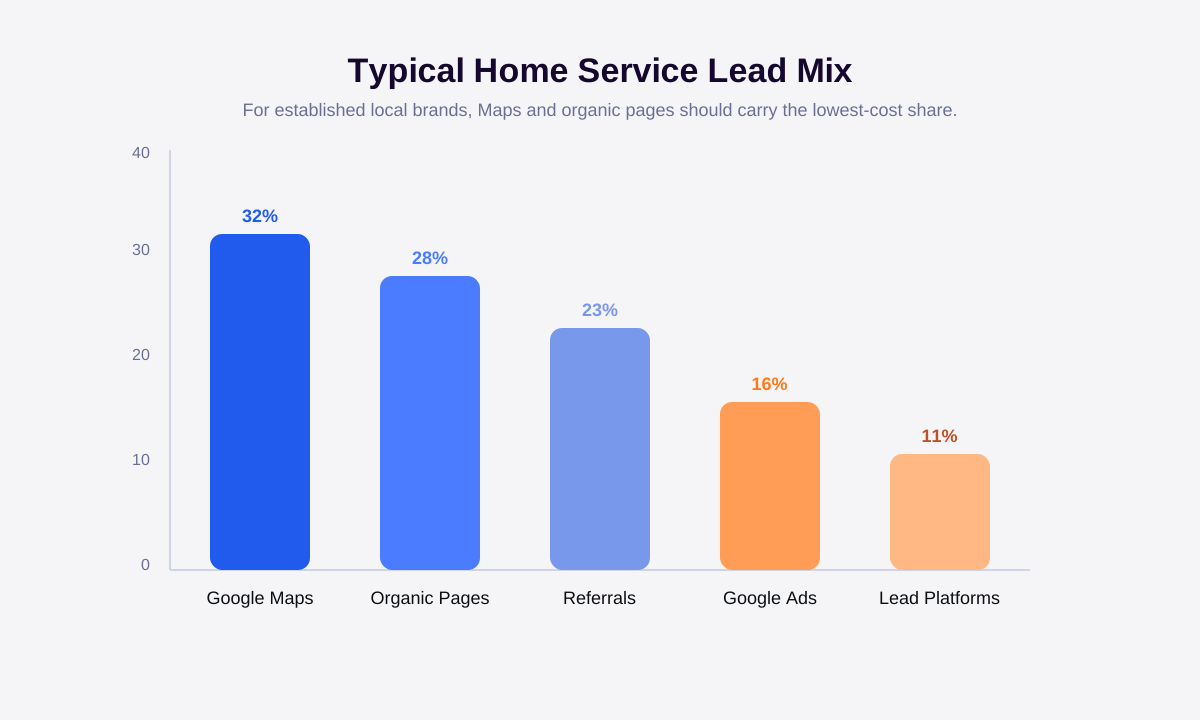
The $23K SEO investment generated over $183K in attributable revenue from Google Maps placement alone — not counting website organic traffic. Meridian reduced their Google Ads budget by 60% and reallocated it to service agreement marketing.
Related HVAC and local-search guides
These are the most useful follow-up reads if you need help turning SEO visibility into booked service calls.
Frequently Asked Questions
How long does HVAC SEO take to show results?
Most HVAC contractors see meaningful ranking improvements within 3–5 months. Emergency keywords in smaller markets can rank within 6–8 weeks with proper GBP optimization. Full organic dominance typically takes 6–12 months of consistent work. The key is starting before your busy season, not during it.
Should I target emergency HVAC keywords or seasonal keywords?
Both, but prioritize emergency keywords first — they have the highest commercial intent and convert immediately. Emergency searches like "AC repair near me" or "furnace not working" have near-100% buying intent. Seasonal keywords (spring tune-up, AC maintenance) build volume during your busy season. A complete HVAC SEO strategy addresses all three buckets: emergency, seasonal, and replacement.
Is my Google Business Profile more important than my website for HVAC SEO?
For local service calls, yes. 44% of all HVAC clicks go to the 3-Pack (Google Maps results). Your GBP directly drives those clicks. However, your website amplifies your GBP authority and captures longer-tail searches, so both work together. Think of your GBP as the storefront and your website as the showroom behind it.
How much does HVAC SEO cost per month?
Professional HVAC SEO ranges from $1,500–$5,000/month depending on market competitiveness and scope. This sounds like a lot until you factor in that organic leads cost 60% less than paid ads and compound over time — a well-ranked HVAC site generates leads indefinitely. Most HVAC companies with average ticket values of $3,000–$8,000 see positive ROI within 4–6 months.
Can I do HVAC SEO myself?
You can handle basics like keeping your GBP updated, collecting reviews, and publishing seasonal blog content. Technical SEO, link building, and competitive keyword strategy typically require professional help. Most HVAC owners find the ROI of professional SEO far outweighs the cost — your time is better spent running service calls than learning algorithm updates.
Ready to Dominate HVAC Search in Your Market?
If you want outside help reviewing your HVAC search presence, book an audit. We can look at your service pages, Google profile, citations, and review process and tell you where the real gaps are.
Book Your Free Strategy Call